Da Thong Academy belongs to all Zhengxin disciples, Dathong co-cultivation, as well as future new disciples and great virtues from all walks of life, regardless of nationality, race, or religion.
Humanities Education with “Harmony and Coexistence” at Its Core
What Da Thong Academy Upholds
Promote Confucian, Buddhist, and Daoist Values, Respect and Embrace Diverse Beliefs and Cultures, Uphold Compassion, and Practice the Great Harmony Way of Coexistence.
Practice in Accordance with Law and Ritual, Comply with Local Government and Religious Cultural Regulations, and Uphold Social Stability and the Purity of Religious Practice.
Da Thong Academy Is a Spiritual Sanctuary for All Humanity, Open to People of Any Nationality, Race, or Religion. With Sincerity and Benevolence as Its Foundation, It Cultivates Global Virtue and Promotes Peace.
Following the Spirit of Learning and Teaching, We Honor the Saints, Cultivate Virtue, Benefit Others, and Guide All Beings Toward Enlightenment.
Upholding “Boundless Compassion, Universal Benevolence,” We Rejoice in Merits, Harmonize with All Beings, and Foster Virtue Together.
不執著於外在名相與形式,專注於內在心性修養。以真誠為本,以智慧為導,融合儒釋道精義,追求心靈大同。
Da Thong Academy’s Vision and Heritage
The original concept of "Da Thong" began in the "Great Harmony" chapter of the *Book of Rites* (commonly referred to as the *Liyun Da Tong* chapter).
Over 2,500 years ago, during the Spring and Autumn period, Confucian sage Confucius (551 BC – 479 BC) explained to his disciples: If a society can practice the "Great Way," it will be able to elect leaders who are both virtuous and capable, who value trust, seek harmony, and naturally establish an ideal world where everyone helps and loves each other, without the pursuit of personal wealth, and contributes selflessly to the public. In such a society, there will be no conspiracies, deceit, theft, or wars, thus creating a "Da Thong World." The original text is as follows:
"When the Great Way is practiced, the world belongs to the public. The virtuous and capable are chosen, trust is upheld, and harmony is pursued. Thus, people do not only care for their own parents, nor solely for their own children, but ensure that the elderly are taken care of in their later years, the strong are employed in their prime, and the young are nurtured as they grow. Orphans, the lonely, the disabled, and the sick all receive support; men have their roles, women have their place. Wealth is not hoarded for oneself but is shared for the good of all. Strength is not used for personal gain but for the benefit of the community. As a result, schemes are closed off and do not arise, theft, rebellion, and unrest do not occur. Thus, doors are left open, and this is called the 'Da Thong' (Great Harmony)."
At the beginning of the 21st century, Chinese sociologist Professor Fei Xiaotong (1910–2005) offered a more profound contemporary interpretation of the "Da Thong" concept: "Let each beauty shine in its own way, appreciating the beauty in others. Beauty in harmony, and the world in unity." This reflects the ancient wisdom of traditional China, advocating for the principle of coexistence among different civilizations around the world, and is regarded as a "Sixteen-character Maxim" for handling relations between different cultures.
"Let each beauty shine in its own way" means to protect the cultural characteristics of each country and ethnic group, without the need to dominate others from a high position; "Appreciating the beauty in others" means respecting the cultural values of other countries and ethnicities, with a gentleman being harmonious yet different, enabling others' beauty to flourish; "Beauty in harmony, and the world in unity" is about appreciating the diversity of world cultures, encouraging a hundred flowers to bloom and a hundred schools of thought to contend, while rejecting the idea of supremacy, forceful dominance, and tyranny. If this is achieved, it will naturally lead to the ideal flourishing age of "Da Thong," where all people within the four seas are brothers, and loving others as if they were family.
In short, by respecting the outstanding civilizations of all countries and ethnic groups, and through mutual admiration and exchange, the convergence of interests can naturally be expanded. By rejecting old mindsets of "you lose, I win" or "the winner takes all," and advocating for new concepts of win-win, multi-win, and shared prosperity, we can naturally establish an orderly civilization among all ethnicities and create a harmonious era of shared development and the "Da Thong" world.
Professor Sun Baoxiang (1916–2000), a Ph.D. in philosophy from the University of California, summarized his decades of experience of self-transformation and helping others, proposing the "Da Thong" spirit of "Compassion, Benevolence, Unity, and Harmony." He encouraged the exchange of diverse cultures and cooperation among different religions, aiming to pursue the "Da Thong" spirit of civilizational unity and racial harmony. In doing so, he pioneered the concept that "religious education creates miracles, resolving grievances and elevating all."
Professor Xu Yuantai (1967–), building on the "Da Thong" principles advocated by the aforementioned sages, encourages all those with affinity and good faith to "remember the source when drinking water," to be grateful and give back. He inspires people to "aspire to establish a true heart in the void" and "not seek comfort for oneself, but wish for all beings to be free from suffering." By integrating the essence of the *Diamond Sutra* and the profound teachings of the *Buddha’s Supreme Victory Dharani*, he practices the diamond-like meaning in the layperson's form. He invites all good-hearted people and venerates the holy sages from all paths, saying, "In the fire of unity, the hearts of all are one, and through the harmony of heaven and humanity, we chant the Dharani." He vows, "May all beings, from the countless beings in the endless rivers of samsara, enter into the Nirvana of no remainder, return to the source and be free from worry for eternity," which is called "Infinite ordinary beings and saints, an endless Da Thong."
Modern schools train students in languages, history, philosophy, law, and science—the “skills for making a living”—yet pay little attention to cultivating their conscience, moral character, and the “way of true knowledge.” The result is proficiency in skills but a lack of moral grounding.
Since the late Qing and early Republican era, Chinese communities in China and Southeast Asia decisively moved away from traditional Chinese education and fully embraced Western-style schooling. While this produced generations of capable professionals, it did not necessarily nurture virtuous individuals. The balance of moral integrity and talent has always been challenging, and today the challenge is even greater.
Historically, the “academy” (書院) was a private educational institution in ancient China, originating in the Tang dynasty and flourishing in the Song and Yuan periods. Often founded or led by renowned scholars, academies were centers for cultural and intellectual exchange, dedicated to cultivating both virtue and talent. They emphasized moral cultivation, combining teaching, ritual, and examinations, and played a crucial role in Chinese educational history. Famous examples include Yingtian Academy in Shangqiu, Songyang Academy in Songshan, Yuelu Academy in Changsha, and Bailudong Academy in Lushan, collectively known as the “Four Great Academies of China.” Notable figures include Northern Song minister Fan Zhongyan, former head of Yingtian Academy, and Southern Song Neo-Confucian scholar Zhu Xi, who presided over Bailudong Academy and had a lasting influence.
Da Thong Academy deliberately chooses the traditional name “academy” rather than the modern “college,” aiming to inherit and carry forward the best of Chinese tradition: “Exchange diverse cultural ideas, cultivate virtuous and talented individuals; nurture the spirit of heaven and earth, and uphold the ideals of past and present sages.”
Guided by the Spirit of Service, Preserving the Beauty of History
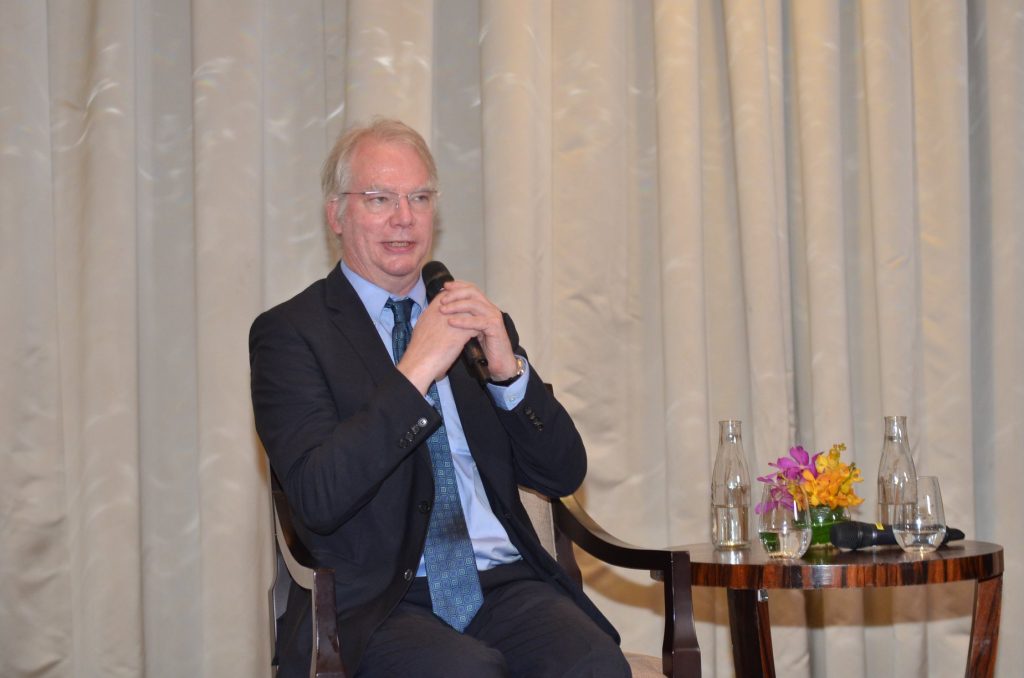
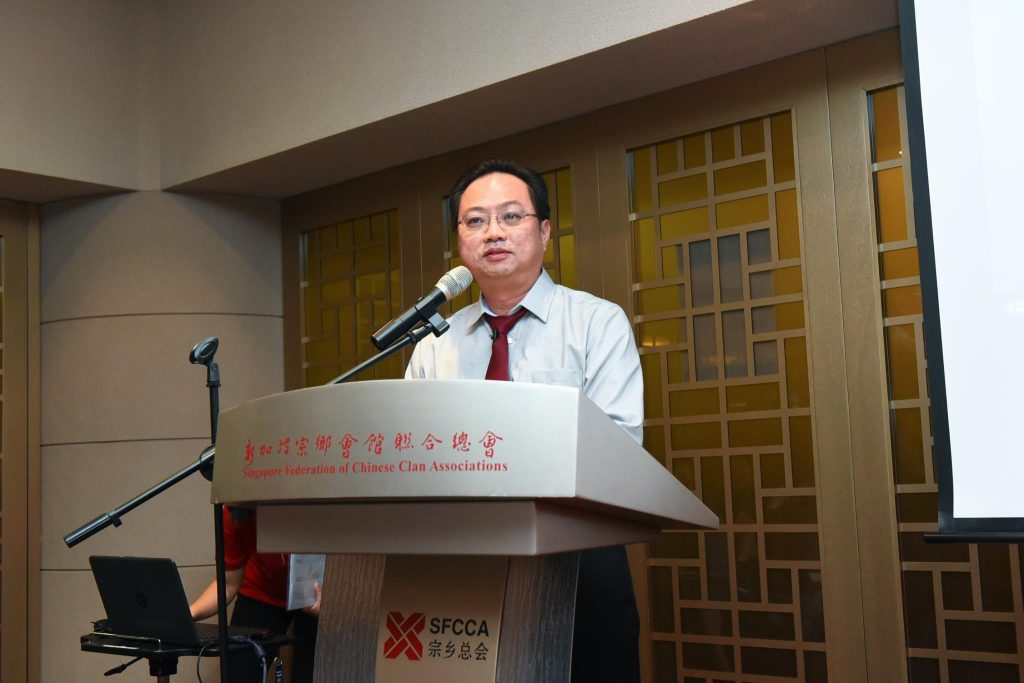

Dathong Academy is dedicated to promoting and advancing traditional Chinese culture by providing a platform for learning, exchange, and practice. We aim to reach the general public and seekers of wisdom by offering courses at various levels, nurturing individuals of virtue and culture
The original concept of "Da Thong" began in the "Great Harmony" chapter of the *Book of Rites* (commonly referred to as the *Liyun Da Tong* chapter).
Over 2,500 years ago, during the Spring and Autumn period, Confucian sage Confucius (551 BC – 479 BC) explained to his disciples: If a society can practice the "Great Way," it will be able to elect leaders who are both virtuous and capable, who value trust, seek harmony, and naturally establish an ideal world where everyone helps and loves each other, without the pursuit of personal wealth, and contributes selflessly to the public. In such a society, there will be no conspiracies, deceit, theft, or wars, thus creating a "Da Thong World." The original text is as follows:
"When the Great Way is practiced, the world belongs to the public. The virtuous and capable are chosen, trust is upheld, and harmony is pursued. Thus, people do not only care for their own parents, nor solely for their own children, but ensure that the elderly are taken care of in their later years, the strong are employed in their prime, and the young are nurtured as they grow. Orphans, the lonely, the disabled, and the sick all receive support; men have their roles, women have their place. Wealth is not hoarded for oneself but is shared for the good of all. Strength is not used for personal gain but for the benefit of the community. As a result, schemes are closed off and do not arise, theft, rebellion, and unrest do not occur. Thus, doors are left open, and this is called the 'Da Thong' (Great Harmony)."
At the beginning of the 21st century, Chinese sociologist Professor Fei Xiaotong (1910–2005) offered a more profound contemporary interpretation of the "Da Thong" concept: "Let each beauty shine in its own way, appreciating the beauty in others. Beauty in harmony, and the world in unity." This reflects the ancient wisdom of traditional China, advocating for the principle of coexistence among different civilizations around the world, and is regarded as a "Sixteen-character Maxim" for handling relations between different cultures.
"Let each beauty shine in its own way" means to protect the cultural characteristics of each country and ethnic group, without the need to dominate others from a high position; "Appreciating the beauty in others" means respecting the cultural values of other countries and ethnicities, with a gentleman being harmonious yet different, enabling others' beauty to flourish; "Beauty in harmony, and the world in unity" is about appreciating the diversity of world cultures, encouraging a hundred flowers to bloom and a hundred schools of thought to contend, while rejecting the idea of supremacy, forceful dominance, and tyranny. If this is achieved, it will naturally lead to the ideal flourishing age of "Da Thong," where all people within the four seas are brothers, and loving others as if they were family.
In short, by respecting the outstanding civilizations of all countries and ethnic groups, and through mutual admiration and exchange, the convergence of interests can naturally be expanded. By rejecting old mindsets of "you lose, I win" or "the winner takes all," and advocating for new concepts of win-win, multi-win, and shared prosperity, we can naturally establish an orderly civilization among all ethnicities and create a harmonious era of shared development and the "Da Thong" world.
Professor Sun Baoxiang (1916–2000), a Ph.D. in philosophy from the University of California, summarized his decades of experience of self-transformation and helping others, proposing the "Da Thong" spirit of "Compassion, Benevolence, Unity, and Harmony." He encouraged the exchange of diverse cultures and cooperation among different religions, aiming to pursue the "Da Thong" spirit of civilizational unity and racial harmony. In doing so, he pioneered the concept that "religious education creates miracles, resolving grievances and elevating all."
Professor Xu Yuantai (1967–), building on the "Da Thong" principles advocated by the aforementioned sages, encourages all those with affinity and good faith to "remember the source when drinking water," to be grateful and give back. He inspires people to "aspire to establish a true heart in the void" and "not seek comfort for oneself, but wish for all beings to be free from suffering." By integrating the essence of the *Diamond Sutra* and the profound teachings of the *Buddha’s Supreme Victory Dharani*, he practices the diamond-like meaning in the layperson's form. He invites all good-hearted people and venerates the holy sages from all paths, saying, "In the fire of unity, the hearts of all are one, and through the harmony of heaven and humanity, we chant the Dharani." He vows, "May all beings, from the countless beings in the endless rivers of samsara, enter into the Nirvana of no remainder, return to the source and be free from worry for eternity," which is called "Infinite ordinary beings and saints, an endless Da Thong."
"Academy" are different from the "schools and academy" of new-style education. Modern universities train students to be proficient in the "art of making a living" such as Chinese, history, philosophy, and legal sciences, but they do not care about preserving the "conscience" and "benign" "way of conscience" of their students. As a result, they are "proficient" but "lacking." Since the end of the Qing Dynasty and the beginning of the People's Republic of China, China and Southeast Asian Chinese communities have resolutely said goodbye to traditional Chinese education and fully embraced the new style of Western education. Although they have successfully cultivated a group of "talents who do things", they may not understand "talents who are human beings." It is difficult to have both virtue and talent. It has been the case since ancient times, and even more so today. The "Academy" is a folk education organization in ancient China. It originated in the Tang Dynasty and flourished in the Song and Yuan Dynasties. It was mostly privately founded or hosted by famous contemporary scholars. It is a place for the exchange of ideas and culture, and it is also an academy for cultivating both moral and talent. It emphasizes Taoism and virtue, integrates "lectures, temple worship, and coursework (assessment)", and plays an important role in the history of ancient Chinese education. The "Yingtian Academy" in Shangqiu, Henan, the "Songyang Academy" in Songshan, the "Yuelu Academy" in Changsha, Hunan, and the "Bailudong Academy" in Lushan, Jiangxi are known as China's "Four major academies". Fan Zhongyan, a famous minister in the Northern Song Dynasty, was once the "dean" of Yingtian Academy, and Zhu Xi, a famous theorist in the Southern Song Dynasty, presided over and lectured at the "Bailudong Academy", which had a profound influence. "Da Thong Academy adopts the traditional name 'Academy' (書院) instead of the modern term 'College' (學院), reflecting its aspiration to uphold and carry forward the finest traditions of Chinese culture. To honor the past while inspiring the future." "Exchange multicultural ideas, cultivate virtuous talents with both moral and talent; nourish the righteousness of heaven and earth, and make the law perfect in ancient and modern times. 」

Da Thong Academy belongs to all Zhengxin disciples, Dathong co-cultivation, as well as future new disciples and great virtues from all walks of life, regardless of nationality, race, or religion.

With the main themes of Yunshui participation in learning, enlightenment with fate, and purifying all life, the children of the academy are taught to respect the saints, praise the sages, follow the good law with joy, cultivate and cultivate, and cross him by themselves.

In line with the great principles of "great compassion for the missed, great sorrow for the same body" and "Hengshun all lives, follow the merits of joy", Da Thong Academy welcomes all brothers and sisters who are open to the truth equally, grateful for the good law, cherish each other, achieve each other, and improve together.

In addition to promoting the culture of Confucianism, Buddhism and Taoism, it also learns, respects, and tolerates other religions and cultures, and promotes all good laws in the world and in the world.

Comply with local government laws and relevant institutional requirements for religious and cultural management.
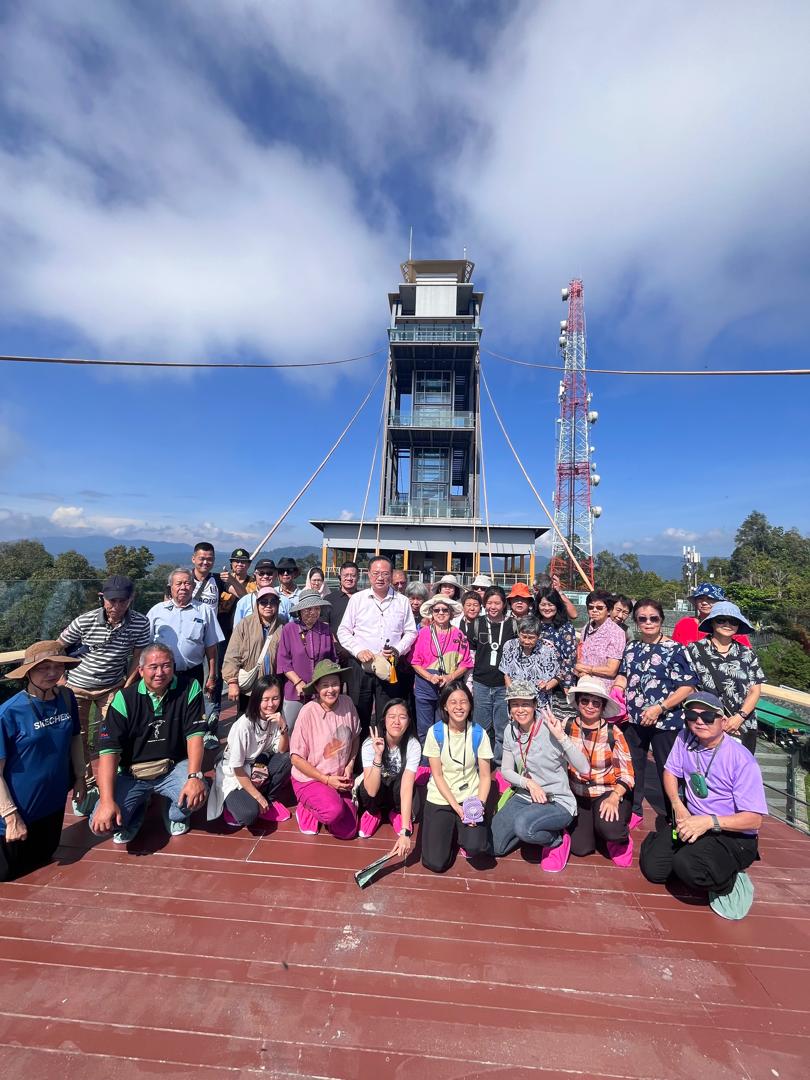
Da Thong Academy
Participate in learning, educate, lead good faith, and work together to build a worry-free pure land of "the world is public, choose talents and abilities", "The beauty of beauty, beauty and commonality" and "compassion, benevolence, unity, and harmony".
I ask the saints to be merciful and help me. The immeasurable Ganges sand counts wet eggs and foetuses, and I will enter endless nirvana and perish. With one heart, heaven and man are united:
I am willing to make a sincere foundation for the void, and I am willing to renew the name of wisdom for all souls.
I am willing to continue to learn for the truth, and I am willing to open peace for the righteousness of the law.

Professor Ding Hesheng is the former director of the Chinese Department of the National University of Singapore, the director of the Yunmao Chao Chinese Culture Research Center, the Yale-Singapore National University College and Guanyin Hall Buddha Temple Chair Professor, Raffles Chair Professor, and the Dean of Da Thong Academy.
Professor Ding's research areas include Chinese religious culture, Taoist culture, Trinity Leader culture, Southeast Asian Chinese immigrants and Chinese temple networks. Professor Ding is the author of a number of works on Taoism and Chinese folk beliefs and religious beliefs, including –
Professor Ding also directed a documentary about the ceremony and celebration of farmers in Putian, Fujian, China, "Boring in Heaven", which was well received.

Professor Xu Yuantai, doctoral supervisor, is the director of the Southeast Asian Chinese Literature Research Center, Associate Professor of the Department of Chinese at Xiamen University Malaysia, senior researcher at the National University of Singapore, Researcher at the Institute of Humanistic Buddhism at Fo Guang Shan, Taiwan, Deputy Director of the Academic Committee of the Singapore SFCCA, International Academic Consultant of Tsinghua Palace in Malacca, and Abbot and Vice President of Da Thong Academy. Professor Xu's research areas include Chinese religious culture, Confucian and Taoist thought, Chinese folk beliefs, the history of Chinese immigration in Xinma, the network of Chinese temples and museums in Xinma, and the history of education in Xinma Chinese School. Professor Xu is the author of –
For more than ten years, Professor Xu has worked closely with Professor Ding Hesheng to conduct research on the history and religion of Chinese immigration in Singapore and Malaysia, and jointly published –
Since chairing the Southeast Asian Chinese Literature Research Center, Professor Xu has actively trained more than 50 young students from China, Singapore, Malaysia and other countries to participate in the study of Chinese history, Chinese New Villages, Chinese guilds, Chinese religions and other topics in Singapore and Malaysia, and trained them to jointly publish a number of outstanding journal papers internationally.Top academic journals, such as:


• Honorary Dean
• Member of the International Confucian Federation
• President of the Chinese "Journey to the West" Cultural Promotion Association

• Advisor

• Advisor
• Head of Electronics Division, Private Enterprise (1975 – 1985)
• Long-term Full-time Service in Charitable Organizations (1986 – 2025)
Formerly a head of the electronics department of a private enterprise, he decisively transitioned to philanthropy in the 1980s, serving a long time with Buddhist organizations in California and serving for many years as General Secretary of the American Buddhist Academy. I have been invited to serve as an advisor to Datong College. Drawing on my extensive experience, I will provide strategic advice on the college's cultural promotion, educational development, and community services, helping the organization refine its development planning and direction.
Over the years, I have accumulated cross-disciplinary experience. Maintaining a pragmatic and forward-looking perspective, I prioritize listening, communication, and coordination, and am adept at building consensus to advance progress. I am always passionate about public welfare and aspire to give back to society, growing through collaboration with all sectors.

• Advisor
• Principal of Daowen Primary School(Present)

• Advisor

• Chairman
• LEE M Architect(Present), Managing Director
A graduate of the University of New South Wales in Sydney, Lee Wee Meng is a professional and experienced registered architect with over 40 years of experience in architectural design. He excels in project planning, architectural detailing, architectural design, and engineering coordination, managing both public and private projects with exceptional skill and expertise in commercial and residential buildings.
Under his dedicated leadership, Lee Wee Meng has successfully established reliable and trusting relationships with clients through his dedication and professionalism in every project. He collaborates closely with industry engineers and frequently engages in in-depth discussions with consulting engineers to ensure that design solutions are aesthetically pleasing, spatially efficient, and cost-effective, maximizing the value of the building's space.
In recent years, Lee Wee Meng has actively incorporated the concept of "green architecture" into his designs, committed to promoting sustainable development. He consistently upholds professional ethics, promotes environmental awareness, and dedicates himself to society and the environment.

• Vice Chairman
• Fiffy Sdn Bhd(1993 – Present), Chairman
With over 30 years of experience in business leadership, she currently serves as Chairman of Fiffy, a renowned Malaysian baby brand, overseeing overall operations, brand strategy, and market development. With a 53-year history, Fiffy specializes in the research, development, and sales of baby clothing and products. Currently, with over 700 stores and counters nationwide, Fiffy provides consumers with safe, comfortable, and high-quality baby products.

• Vice Chairman, Secretary
• Built a sales team for a German equipment distributor
• Developed and expanded the Malaysian market
• Monitored overseas procurement and transportation progress
2. UR Coffee Sdn Bhd(2019 – 2022), Planner Manager & Head of Production Department
• Developed global production plans, coordinated factory capacity allocation, and ensured supply met market demands across regions
• Adjusted monthly/quarterly production schedules based on sales forecasts, inventory levels, and raw material availability
• Monitored production line efficiency, analyzed bottlenecks, and proposed optimization measures (e.g., equipment scheduling, manpower allocation)
• Coordinated with sales, marketing, and logistics departments to translate customer orders into executable production directives
• Analyzed historical data (such as seasonal sales peaks) to optimize stock preparation for new product launches or promotional campaigns

• Treasurer, Committee Member
• LEE M Architect(present), Manager

• Secretary
• Cuppachoice International Pte Ltd(2000 - 2023), Operations Supervisor
Job Description: With 23 years of experience in operations management in the food and beverage industry, I am fully responsible for daily operations, employee training, supply chain coordination, and quality control, ensuring products meet international certifications (GIC, HACCP) and customer requirements. Possessing strong on-site problem-solving skills and cross-departmental collaboration experience, I support the company's stable growth and market expansion.

• Accountant

• Committee Member
• Ditrolic Energy (2024-Present), Investment and Project Finance Executive
Lee Ken Chern has nearly seven years of experience in market research, business consulting, and investment. His expertise covers market research, market entry strategies, financial modeling, financial credit assessment, and bank financing. With this multidisciplinary background, he excels in assisting international companies entering the Malaysian market and investing in new energy.